Save $1,000 on Your Basement Remodel
Build Organized Play and Craft Areas With Basement Playroom Remodeling in Newington, CT
Toys in the living room. Craft supplies covering the kitchen table. Games stored wherever there happens to be room. When kids do not have a dedicated place for their activities, play can quickly spread into the spaces everyone else uses. Basement playroom remodeling can give those activities a home of their own while helping the rest of your house stay more organized.
A good playroom should solve today’s problems without becoming obsolete as soon as your children’s interests change. Younger children may need open floor space for toys and imaginative play. Later, the same room might be used for crafts, homework, games, reading, or spending time with friends. Thinking beyond one age or activity can help you get more long-term use from the basement.
Dynamic Basements Plus helps homeowners plan playrooms around real family routines. We look at how much open space you want, what needs to be stored, where quieter activities could happen, and how the room might change over time. Basements are the main focus of our remodeling work, and our team brings over 26 years of construction experience to creating spaces designed around the people who use them.
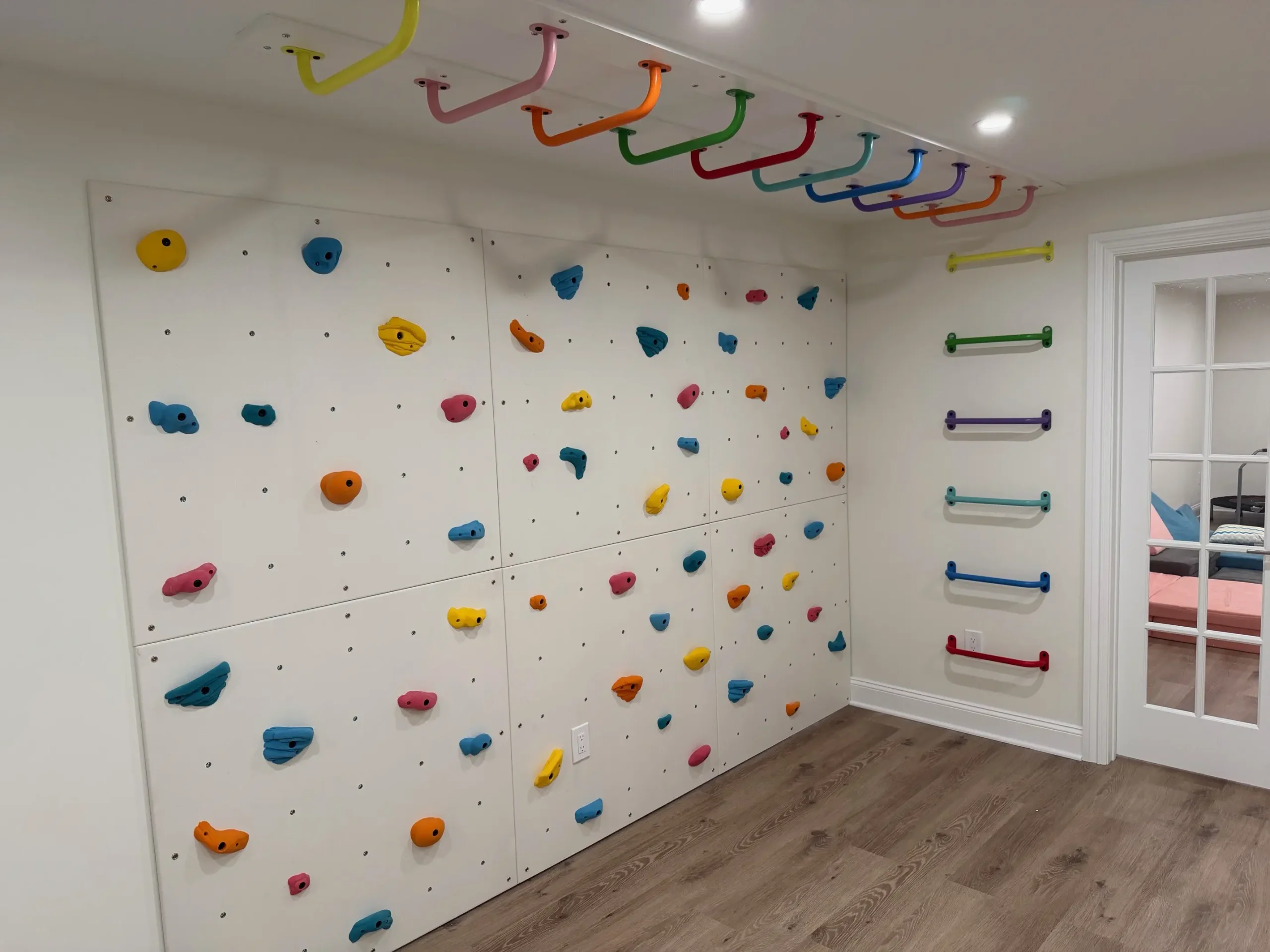
Design a Playroom That Can Change as They Grow
Children’s interests do not stay the same for long. A room filled with toys today may need to accommodate books, games, homework, crafts, or completely different hobbies a few years from now.
That makes flexibility one of the most useful considerations in playroom remodeling.
Instead of designing every part of the basement around one age or activity, we can help you think about zones that can serve different purposes over time. An open area used for floor play now might eventually become a place for games or other group activities. A reading corner can continue to work as children get older. Storage that starts with toys may later hold books, art supplies, games, or school materials.
This does not mean the room has to feel plain or unfinished. It means making choices with enough flexibility that the basement can keep working as your household changes.
Leave Room for Active and Group Play
Open floor area gives children space for activities that do not fit neatly at a table. It can also make the room more adaptable because the same area can support different toys, games, and interests without requiring a major change to the layout.
Give Toys and Games a Place to Go
A playroom can still become cluttered if everything ends up on the floor. Bookshelves, cubbies, and cabinets can create defined storage for toys, games, books, and supplies while making cleanup more manageable.
Set Aside Space for Reading and Crafts
Not every activity needs the same type of space. A reading area can create a quieter corner, while a craft area can give supplies and projects a place outside the kitchen or dining room. These smaller zones can help one playroom support several interests.
Choose Finishes With Everyday Use in Mind
Playrooms are active spaces. The supplied project options include durable, easy-to-maintain finishes so the room can be planned for regular family use rather than treated like a space that needs to remain untouched.
Keep the Layout Flexible
Today’s favorite activity may not be next year’s favorite. A flexible basement playroom design can leave room for furniture, storage, and activity areas to change as children grow and interests develop.
Start With the Clutter You Want to Get Out of the Rest of the House
Storage is not the most exciting part of planning a playroom, but it may be one of the features your household notices most after the project is complete.
Think about what currently causes clutter upstairs.
Maybe toys are stored in baskets throughout the living room. Craft supplies have taken over a cabinet in the kitchen. Board games are stacked wherever there is room. Books migrate from one bedroom to another. A basement playroom gives you an opportunity to bring many of those items together instead of simply creating another place for them to pile up.
The useful question is not, “How much storage can we fit?”
It is, “What actually needs to be stored?”
That answer can help determine whether bookshelves, cubbies, cabinets, or a combination makes sense.
Items children use regularly may benefit from storage that keeps them accessible. Other supplies may be better suited to cabinets. Books can have their own area near a reading corner. Craft supplies can stay closer to the place where those activities happen.
Organizing storage around activities can also make cleanup easier because belongings have logical places to return to when playtime is over.
For homeowners looking at playroom ideas for basements, this is an important distinction. A room can look appealing in a photograph but still be frustrating every day if there is nowhere practical to put the things that belong in it.
The goal is to make the playroom easier for the household to use, not simply give the clutter a new address.
Turn an Unfinished Basement Into More Room for Family Life
If the basement is currently unfinished or underused, a playroom can give that square footage a clear purpose.
An unfinished basement playroom project should begin by looking at how the available space could support the activities your family needs. You may want one large open play area, several smaller activity zones, or a playroom that shares the lower level with another use.
There is no reason every playroom needs the same arrangement.
A family with younger children may value open floor space and easily accessible toy storage. A household with children who enjoy crafts may want a defined area where projects can stay downstairs instead of taking over shared tables upstairs. Families with different age groups may benefit from creating several activity areas within the same basement.
The relationship with the rest of the lower level matters too.
The playroom might sit next to a family or entertainment area, allowing children and adults to use different parts of the basement at the same time. Storage can help keep playroom belongings from spreading into neighboring areas. If the basement needs to serve several purposes, the layout can give play its own zone without requiring every square foot to become children’s space.
Thinking about the whole basement can make the playroom more useful because the project becomes part of how the household lives rather than an isolated room.
Plan for the Playroom They Need Next, Not Only the One They Need Today
One of the easiest ways to get more value from a playroom is to consider what could happen there later.
That does not require predicting exactly what your children will enjoy five years from now. It simply means avoiding a layout that only works for one narrow stage.
Open play space is naturally flexible. Bookshelves can continue holding books or become storage for other belongings. Cabinets that organize toys can later store games, school supplies, or hobby materials. A craft corner may eventually become a homework area or another type of workspace.
This approach can be particularly helpful when deciding how much permanent storage to add and where to put it.
You want enough organization to make the room useful today without filling every wall and corner so completely that the space becomes difficult to change later.
The same thinking applies to activity zones. A reading area does not have to remain exclusively for children’s books. A table used for crafts can support games or homework later. Open areas can accommodate changing furniture and activities as the household’s needs evolve.
A flexible room can therefore stay useful long after the toys that originally inspired the project have disappeared.
That is a more practical goal than trying to create a playroom frozen around one stage of childhood.
Make the Playroom Feel Like Part of Your Finished Basement
A children’s space can still feel connected to the rest of the home.
The playroom may be colorful, active, and filled with toys, but the underlying flooring, walls, storage, and layout can still relate naturally to surrounding basement rooms. That becomes particularly important when the lower level serves several purposes.
We help homeowners think about the playroom as part of that larger picture.
Where should people enter the room? Which activities need the most space? Where should books and supplies be stored? Does the playroom need to remain open to another basement area, or would a more defined space work better for your household?
Those practical questions help shape the room before the finishing details take over the conversation.
Dynamic Basements Plus has been serving homeowners since 2013. Our 40-person team is licensed and insured, and basements remain the main focus of our work. More importantly for a playroom project, we take the time to understand what your family needs from the space before deciding what should go into it.
You do not need a complete layout when you start the conversation. Tell us what keeps ending up in the living room, what your children enjoy doing, what you wish you had room for, and how you expect the basement to be used alongside the playroom.
If you are considering basement playroom remodeling in Newington, CT, we can help you turn underused space into a room that gives play, creativity, storage, and changing interests somewhere to belong.
Frequently Asked Questions About Basement Playrooms
How Can I Keep a Basement Playroom From Becoming Cluttered?
Start by planning storage around what your children actually use. Toys, books, games, and craft supplies may each benefit from different storage. Bookshelves, cubbies, and cabinets can give those items designated places while keeping more floor area available for activities. The goal is not simply adding storage, but putting it where it supports how the room is used.
Should I Design the Playroom Around My Children's Current Ages?
Their current needs should influence the room, but it can help to leave some flexibility for later. Open activity areas, adaptable storage, reading or craft zones, and furniture that can change over time can allow the room to support new interests. A playroom does not need to be redesigned every time your children’s routines change.
Can a Basement Playroom Have Separate Activity Areas?
Yes. Depending on the available space, a playroom can include open play areas along with quieter zones for reading, crafts, games, or other activities. Separating activities does not always require separate rooms. Storage, furniture placement, and the overall layout can help different parts of the playroom serve different purposes.
Can a Playroom Share the Basement With a Family or Entertainment Room?
Yes. A playroom can be one part of a larger finished basement. This can work well for households that want children to have their own activity area while keeping family or entertainment space nearby. Planning storage and circulation can help keep toys and supplies within the playroom instead of allowing them to spread throughout the lower level.
What Should I Prioritize When Remodeling an Unfinished Basement Into a Playroom?
Begin with how your family wants to use the space. Consider how much open play area you need, what must be stored, which activities deserve their own zones, and how the room may change over time. From there, the layout, storage, and finishes can be planned around those priorities rather than adding features simply because there is available space.
Save $1,000 While Giving Play More Room
Make more room for family life and save $1,000 on qualifying $20,000+ projects.